Market Report ·
Russian Diesel Deal: Temporary Relief or a Strategic Energy Loophole?
President Trump has secured a temporary arrangement for Russian diesel supplies (starting with 300,000 tonnes and potentially reaching ~4.8 million tonnes) alongside a limited sanctions waiver. While the volumes can ease short-term diesel pressure, they remain modest relative to U.S. daily consumption and ongoing losses from damaged Russian refining capacity. The announcement does not yet confirm
ΔΣΦ | DELTANODE MARKET INTELLIGENCE
🛢️ Russian Diesel Deal: Temporary Relief or a Strategic Energy Loophole?
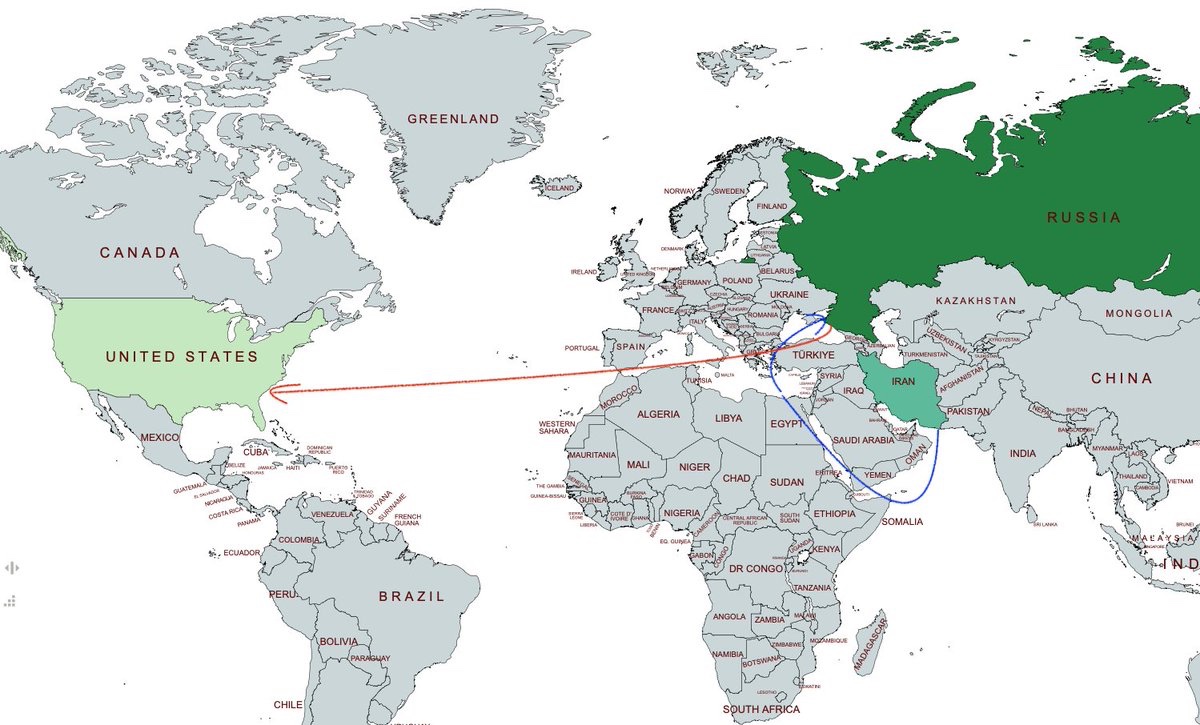
🇺🇸 Washington Opens a Supply Channel to Russia. Does It Change the Oil Market?
📅 Date: October 10, 2026
🏷️ Category: Energy Markets · Geopolitics · Supply Chain Risk
📊 Market Bias: Cautious · Structural Oil Bearishness Not Confirmed
🔎 Executive Summary
President Donald Trump has announced an arrangement under which Russia will supply additional diesel to U.S. and international markets, accompanied by a temporary easing of certain U.S. sanctions restrictions. The reported schedule begins with an immediate 300,000 metric tons, followed by 500,000 tons in November, 1 million tons shortly thereafter, and up to another 3 million tons contingent on the condition of Russian refineries — a headline package of roughly 4.8 million metric tons.
The U.S. Treasury has issued a temporary general license authorizing transactions involving the sale, delivery, offloading, and importation of Russian-origin diesel through 7 April 2027.
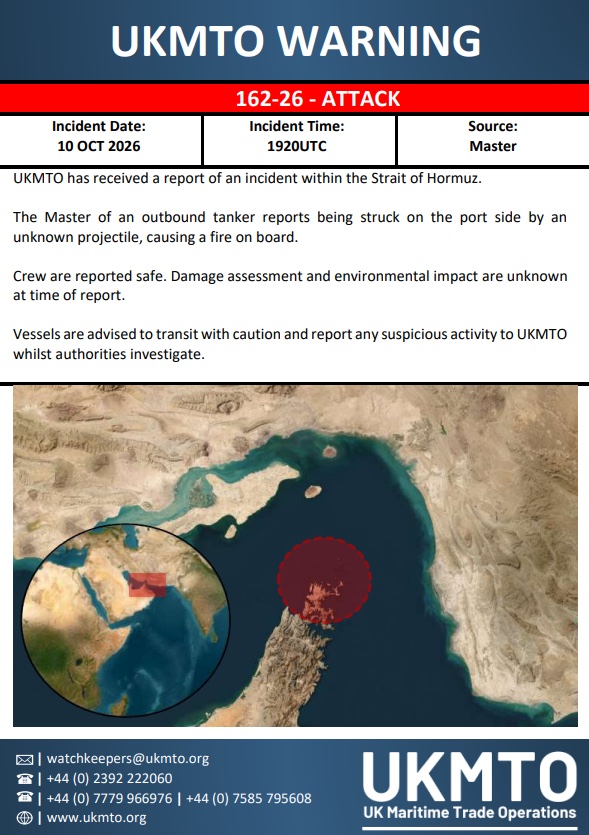
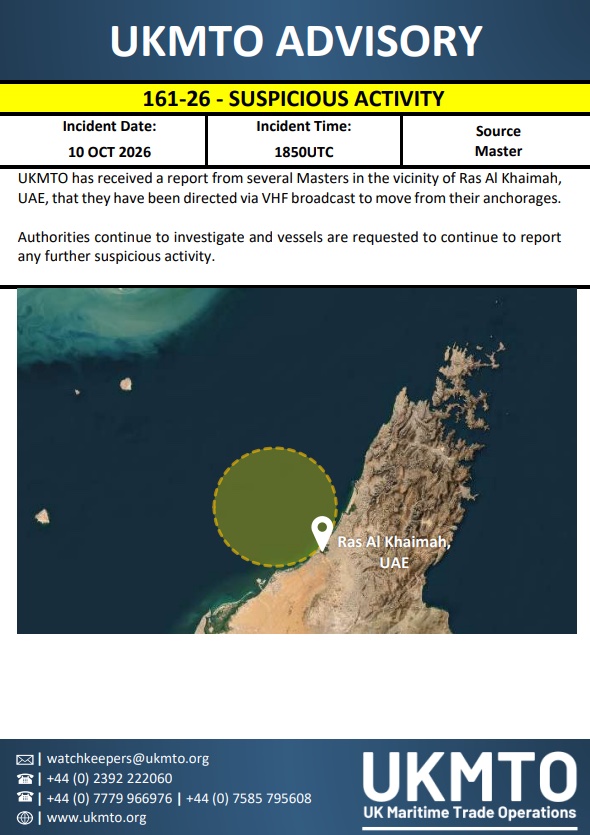
The key question is not simply how much diesel Russia has promised. It is how much will actually reach the market, how quickly it will arrive, and whether the new supply will offset continuing disruptions from Ukrainian strikes on Russian refining capacity, residual effects from the Iran conflict, and already-tight inventories.
Three factors define the current thesis:
- 🛢️ Physical supply: Announced volumes must be distinguished from delivered cargoes and available inventories.
- 🌍 Geopolitical risk: Russia, Ukraine, Iran, and Western sanctions remain central to energy supply and trade flows.
- 📉 Market pricing: A decline in refined-product prices does not automatically confirm a sustained decline in crude oil.
ΔΣΦ Thesis: The announcement could ease short-term diesel pressure, but it does not independently establish that the broader energy squeeze is over.
1. 🧮 The Supply Math: How Much Is 300,000 Tons — and the Full Package?
U.S. distillate (diesel + heating oil) product supplied currently runs in the range of approximately 3.65–3.83 million barrels per day. Using a standard conversion factor of ~7.3 barrels per metric ton for diesel/gasoil, this equates to roughly 500,000–525,000 metric tons per day. We use 510,000 metric tons/day as a realistic current benchmark.
Corrected illustrative comparisons:
| Volume | Approx. Barrels (at 7.3 bbl/t) | Equivalent U.S. Consumption |
|---|---|---|
| 300,000 tonnes (initial) | ~2.19 million | ~14 hours |
| 500,000 tonnes (Nov) | ~3.65 million | ~1 day |
| 1,000,000 tonnes | ~7.3 million | ~2 days |
| 3,000,000 tonnes | ~21.9 million | ~6 days |
| ~4.8 million tonnes total | ~35 million | ~9–10 days |
[ \text{Equivalent days} = \frac{\text{Total volume (tonnes)}}{510{,}000} ]
Critical distinctions:
- These figures compare the entire announced volume against U.S. consumption only. The cargoes are intended for both U.S. and international markets; the portion reaching American buyers may be smaller.
- Delivery schedules, actual loadings, vessel movements, and competing demand determine real impact.
- U.S. commercial distillate inventories currently stand near 105.1 million barrels (week ending 2 October 2026), down roughly 13–16 million barrels year-over-year and well below the five-year seasonal average. East Coast (PADD 1) stocks remain especially tight.
A large headline number is not necessarily a large net addition to the physical market.
2. 🇷🇺 Why Would Putin Agree?
Russia may have several incentives:
- 💰 Revenue: Higher diesel prices improve export economics and create an opportunity to monetize available inventories.
- 🚢 Market access: A temporary easing of restrictions reopens commercial channels previously constrained by sanctions and Russia’s own export ban.
- 🤝 Diplomatic leverage: Moscow can present itself as a supplier capable of helping ease Western energy pressure.
- ❄️ Seasonal considerations: Summer-grade diesel becomes less attractive as winter approaches; cold-weather markets require appropriate fuel specifications. Claims that Russia is specifically clearing summer-grade stocks remain a hypothesis requiring evidence.
Russia may benefit commercially and politically even if the additional supply proves insufficient to produce a lasting decline in global oil prices.
3. 📉 Why the Announcement May Not Break the Oil Rally
Oil and refined-product prices respond to marginal supply, inventories, transport constraints, and expectations about future disruptions.
A simplified market balance is:
[ \Delta S = S_{\text{new}} - S_{\text{lost}} ]
Where:
- ( S_{\text{new}} ) = additional supply actually delivered
- ( S_{\text{lost}} ) = supply lost through outages, infrastructure damage, or transport disruptions
- ( \Delta S ) = net change in available supply
If additional deliveries merely offset ongoing losses, the market may remain tight. Only if new supply consistently exceeds those losses and inventories begin to recover does downward pressure on prices become more credible.
Current context on the “lost” side: Ukrainian drone strikes have significantly impaired Russian refining. IEA and market estimates indicate Russian crude runs fell as much as ~30% at points in 2026 (to roughly 3.8–4.0 million b/d). Three of Russia’s six largest diesel producers were offline or heavily curtailed in September. Russia imposed (and repeatedly extended) a diesel export ban through at least end-October 2026 to protect domestic supply; seaborne diesel exports collapsed from prior levels above 800,000 b/d.
4. 🇮🇷 Supply-Chain Risk: Is Anyone Checking the Crude Origin?
This remains one of the most important due-diligence questions surrounding complex petroleum trade.
In November 2018 the U.S. Treasury documented a network involving Iranian oil shipments, the Russian state-owned trading company Promsyrioimport, and intermediaries connected to deliveries to Syria. That history demonstrates that complex Russia–Iran petroleum arrangements have existed. It does not establish that Iranian crude is being used to produce the diesel in the current agreement.
Product origin versus feedstock origin are different questions:
- 🏭 Refinery origin: Where was the diesel manufactured?
- 🛢️ Crude origin: Where did the oil processed by that refinery originate?
- 🚢 Cargo chain: Which companies owned, transported, and traded the product?
- 📄 Compliance: What do the applicable sanctions license and origin documentation actually require?
A product refined in Russia is not automatically Iranian-origin diesel simply because its supply chain may involve international crude purchases. Equally, the refinery location alone does not establish the full history of the feedstock or the parties involved.
ΔΣΦ Assessment: The Russian–Iranian connection warrants scrutiny, but the allegation that Iranian diesel is being disguised as Russian diesel remains unverified. The historical record is a reason to investigate, not proof of wrongdoing in this transaction.
5. 🇫🇷 G7 Strategic Reserves: Relief Today, Replenishment Tomorrow
Strategic petroleum reserves can bridge temporary shortages, but releasing stored fuel does not permanently replace lost production or refining capacity.
A simplified inventory equation is:
[ I_{t+1} = I_t + P + M - C - X ]
Where:
- ( I_t ) = inventories at the start of the period
- ( P ) = domestic production
- ( M ) = imports
- ( C ) = domestic consumption
- ( X ) = exports
When additional supply fails to exceed consumption and exports, inventories decline. Reserve releases can temporarily improve availability, but depleted stocks may later require replenishment. The same principle applies to the Russian diesel: temporary supply relief does not necessarily mean the underlying energy imbalance has been resolved.
6. 🇺🇦 Ukraine and the Risk of Offsetting Supply Losses
Russian refining infrastructure, export terminals, and shipping routes remain exposed to geopolitical disruption. Ukrainian President Volodymyr Zelenskyy has publicly condemned the arrangement, calling it a “gift to Putin” that amounts to an investment in a war that must be ended, not prolonged.
If new diesel exports enter the market while further refinery outages or transport interruptions reduce other available supplies, the net benefit can be smaller than the announced volume suggests. The market must monitor both sides of the equation:
- 🟢 Additional supply reaching buyers
- 🔴 Production, refining, or transportation capacity being lost
This is especially important when a political announcement is made during a period of elevated geopolitical risk.
7. 📊 What DeltaNode Will Monitor
| Indicator | Why it matters |
|---|---|
| 🚢 Confirmed cargo arrivals | Measures actual deliveries rather than commitments |
| 📦 U.S. distillate inventories | Shows whether available stocks are recovering |
| 🏭 Refinery utilization | Tracks the capacity to produce refined fuels |
| 📉 Diesel crack spreads | Measures refined-product strength relative to crude |
| 🚛 Freight rates & shipping flows | Identifies transport constraints and changing routes |
| 🇷🇺 Russian export data | Tests whether announced commitments become sustained exports |
| 📄 Sanctions & cargo records | Helps assess legal compliance and origin documentation |
| 🌍 Geopolitical developments | Tracks the probability of further supply disruptions |
No single indicator is sufficient. The thesis should change only when multiple independent measures confirm an improvement in physical supply.
🎯 Final Conclusion: Do Not Trade the Headline Alone
DeltaNode’s position is that the Russian diesel announcement may provide short-term relief, but it is not sufficient evidence for a sustained bearish oil outlook.
The initial shipment is limited relative to daily U.S. consumption, and the larger commitment must be evaluated against its delivery schedule and allocation across international markets. Russia may gain revenue and diplomatic leverage. The United States may receive additional fuel. But the lasting impact depends on whether new deliveries exceed continuing supply losses and produce a measurable improvement in inventories.
The historical Russian–Iranian petroleum network also highlights a legitimate compliance question: Are the cargo origin, refinery records, and supply-chain counterparties being independently verified? That question deserves investigation, but the current information does not establish that Iranian crude is involved in the diesel shipments.
ΔΣΦ | Market Position
- 🟡 Base case: Temporary diesel relief; a structural decline in oil prices remains unconfirmed.
- 🔴 Bearish confirmation: Sustained deliveries, recovering inventories, improving refinery output, and easing geopolitical risk.
- 🟢 Upside risk: Further refinery disruptions, shipping constraints, or geopolitical escalation that offsets the additional supply.
Price the physical market. Verify the data. Do not confuse a political announcement with a structural change in supply.
Disclaimer: This report is for informational and research purposes only and does not constitute financial or investment advice. Announced quantities, sanctions terms, and delivery schedules should be checked against primary documentation (including the relevant OFAC general license) as further details become available.