Market Report ·
🇺🇸 US STOCKS & CRYPTO MARKET REPORT Friday 16th October , 2026
Bitcoin rebounds above $82.6K after $940M in liquidations. Hot PPI, weak ETF flows and Fed uncertainty keep markets on edge ahead of October's key decisions.
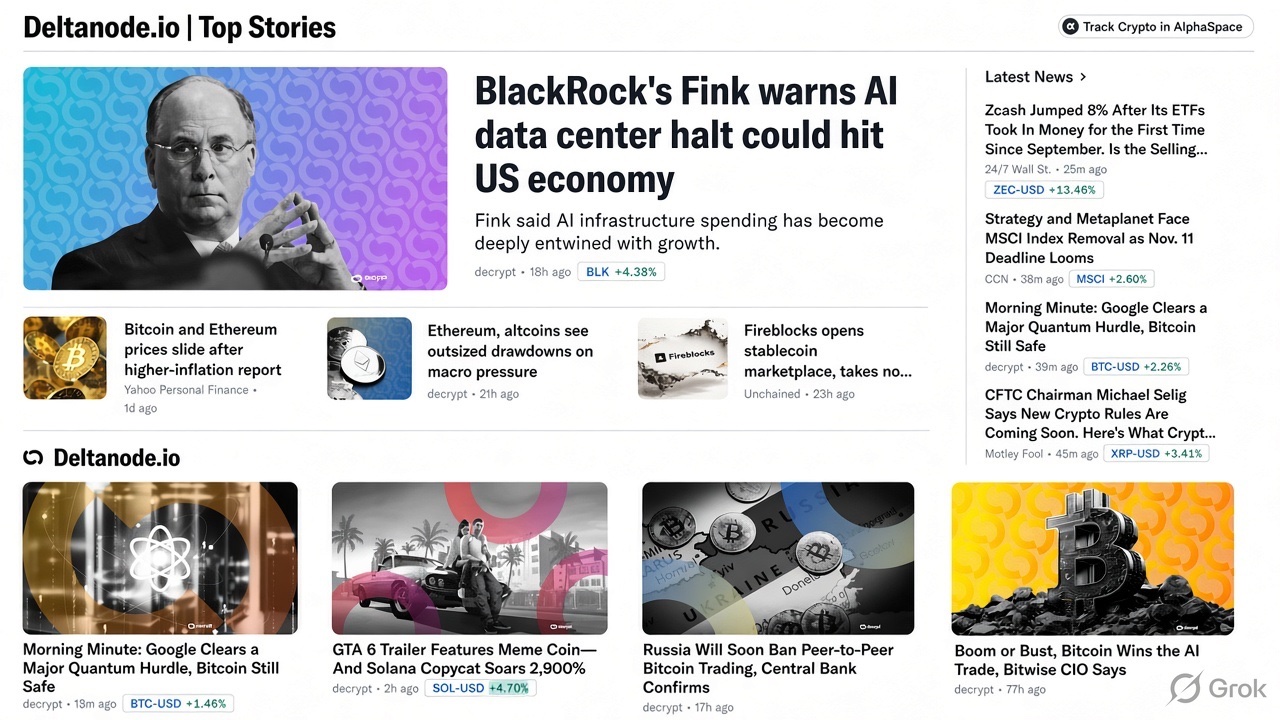
🌐 DELTANODE | DAILY MARKET INTELLIGENCE 📅 Friday, 16 October 2026 ΔΣΦ | Crypto • Macro • Equities • Global Markets
━━━━━━━━━━━━━━━━━━
📊 1. CRYPTO MARKET OVERVIEW
😐 Fear & Greed Index: 52/100 | Neutral ₿ Bitcoin: $82,652 | +2.05% (24H) ◆ Ethereum: $2,480 | +4.91% (24H) 🌐 Total Crypto Market Cap: $2.78T | +2.72% 📊 24H Trading Volume: $86.41B | -19.43% ₿ Bitcoin Dominance: 59.78% | -0.28% 🔄 Altcoin Season Index: 61/100
Bitcoin fell to approximately $79,735-$79,814 following hotter-than-expected US inflation data before recovering above $82,500. The sell-off triggered approximately $939.53 million in crypto liquidations within 24 hours, affecting 176,707 traders.
🔻 Liquidation Breakdown • Long positions accounted for 84.3% of liquidations. • The largest reported single liquidation was a $12.03 million BTCUSDT position on Binance. • Bitcoin subsequently rebounded, suggesting forced selling may have eased temporarily.
⚠️ DeltaNode Interpretation: The recovery is encouraging, but a liquidation-driven bounce does not confirm a durable market bottom. Spot buying, sustained price acceptance above resistance and healthier leverage conditions are needed for confirmation. If open interest rebuilds rapidly while volume continues to decline, another liquidation wave remains possible.
📌 Lower trading volume despite the market-cap recovery suggests participation needs to be monitored closely.
━━━━━━━━━━━━━━━━━━
🏭 2. US PRODUCER INFLATION SURGES
US Producer Price Index (PPI) inflation delivered a major upside surprise in September.
📈 Key Figures • Headline PPI: +1.3% MoM versus expectations of approximately +0.5% to +0.6%. • Annual PPI: +6.3%, the largest annual increase since December 2022. • Core PPI: +0.7% MoM versus +0.3% expected. • Energy accounted for more than 80% of the monthly increase. • Petrol prices jumped 20.3% during the month.
The monthly increase was the largest since March 2022.
Despite the inflation shock, the 10-year US Treasury yield reportedly declined by approximately 10 basis points to 5.09%.
Why? Markets looked beyond the headline. Several components feeding into the Fed's preferred PCE inflation measure were comparatively calmer, although airfares remained a concern.
Retail sales also rose 0.8%, beating expectations of 0.3%. However, the retail sales control group, which feeds into GDP calculations, increased by only 0.1%.
🎯 Next Critical Catalyst: September PCE inflation is scheduled for 29 October, one day after the Fed's 28 October policy decision.
⚠️ DeltaNode Takeaway: Energy-driven inflation creates a difficult policy trade-off. If higher fuel costs spread into broader goods and services, inflation could become more persistent. If the pressure remains concentrated in energy, the Fed may look through part of the initial shock.
━━━━━━━━━━━━━━━━━━
🏛️ 3. FED WATCH: KEVIN WARSH AND THE AI INFLATION QUESTION
Fed Chair Kevin Warsh offered no clear signal regarding the 28 October policy decision during his appearance in Bangkok alongside IMF chief Kristalina Georgieva.
Warsh described AI as potentially the most consequential change to the US and global economy during his lifetime. He also identified the surge in AI investment as a potential source of near-term inflationary pressure, even as productivity gains could expand economic output over time.
📉 Rate Expectations • Markets reportedly reduced the probability of an October rate hike from approximately 50% after CPI to around 30% by Thursday's close. • Markets continued to lean toward the Fed holding rates steady in October, with December remaining an important focus.
Fed officials enter their communications blackout on Saturday, 17 October, leaving markets to interpret incoming data ahead of the decision.
🧠 Why AI Matters for Rates AI investment can increase demand for chips, electricity, data centres and construction in the short term. Over time, productivity gains could lower costs and increase productive capacity.
The Fed must assess which effect dominates and how quickly.
📌 Watchlist: Treasury yields, inflation expectations, energy prices, October rate probabilities and the 29 October PCE release.
━━━━━━━━━━━━━━━━━━
₿ 4. BITCOIN: THE MACRO BULL CASE
Bitwise Chief Investment Officer Matt Hougan argued that Bitcoin could rise under two dramatically different AI-driven economic scenarios.
🚀 Scenario A: AI Boom • Productivity increases. • Economic abundance expands. • Bitcoin benefits as a scarce asset in an increasingly productive economy.
⚠️ Scenario B: AI Bubble and Collapse • A severe market disruption could trigger substantial government intervention and monetary support. • Hougan argues that the resulting policy response could benefit Bitcoin.
His central argument is that Bitcoin may benefit both from a productivity-driven boom and from a crisis-driven monetary response.
However, this is an investment thesis, not a guaranteed outcome. Liquidity conditions, real yields, regulation, demand and investor positioning could challenge the thesis.
📌 DeltaNode View: A bullish long-term narrative does not eliminate short-term downside risk. Bitcoin still needs confirmation from price structure, spot demand and derivatives positioning.
━━━━━━━━━━━━━━━━━━
💸 5. BITCOIN ETF FLOWS REMAIN WEAK
US spot Bitcoin ETFs recorded only $5.06 million in net inflows on Thursday, 15 October, following $261.5 million in outflows on Wednesday.
• BlackRock IBIT: +$16.79 million. • Grayscale Bitcoin Mini Trust: -$7.64 million. • October net flows: approximately -$539.8 million so far.
Bitcoin's recovery above $82,000 has therefore occurred alongside weak aggregate ETF demand.
⚠️ What This Means: A price rebound without strong institutional inflows may be less convincing than a recovery supported by sustained spot demand. ETF flows are one input, not a standalone directional signal.
━━━━━━━━━━━━━━━━━━
🏦 6. MASTERCARD LAUNCHES ITS GLOBAL MONEY PLATFORM
Mastercard and BVNK launched their Global Money Platform on 16 October, following Mastercard's $1.8 billion acquisition of BVNK, completed on 3 August.
The platform provides banks, fintechs and enterprises with a single API to integrate multi-currency accounts that hold traditional fiat currencies and stablecoins side by side.
🤝 Early Integration Partners • Nuvei • Marqeta • Ontop • Beem • Almond FinTech
🌐 Why It Matters The move signals continued integration of stablecoins into mainstream payment infrastructure. Rather than relying solely on crypto-native platforms, businesses can increasingly access digital-dollar and other stablecoin capabilities through established financial technology providers.
📌 DeltaNode Takeaway: Stablecoin infrastructure adoption is a structural development worth tracking independently of daily BTC price movements. The longer-term opportunity lies in settlement, payments and cross-border money movement.
━━━━━━━━━━━━━━━━━━
🔁 7. RIPPLE LAUNCHES 24/7 INSTITUTIONAL RWA SWAPS
Ripple Prime launched real-world asset perpetual swaps on 16 October, with market maker Virtu as its first institutional client.
The offering covers more than 100 reference markets spanning:
• Equities and ETFs • Metals • Energy • Foreign exchange
The products provide continuous market exposure, including weekends.
⚙️ How It Works • The swaps reference perpetual futures listed by Trade.xyz on Hyperliquid. • RLUSD is accepted as collateral. • Positions can be cross-margined against other Ripple Prime positions.
🏦 Institutional Significance Traditional financial markets operate on limited schedules, while crypto markets remain open around the clock. Weekend access can help institutions manage exposure when traditional markets are closed, although it also introduces liquidity, pricing and risk-management considerations.
📌 DeltaNode Takeaway: The convergence of traditional assets and crypto-market infrastructure continues to accelerate. Monitor actual liquidity, adoption and execution quality rather than relying on launch announcements alone.
━━━━━━━━━━━━━━━━━━
📱 8. SOLANA MOBILE PARTNERS WITH LEDGER
Solana Mobile named Ledger its first hardware expansion partner.
Ledger's new Atom device will ship with the Seeker app and Solana dApp Store preinstalled.
🔐 Security Highlights • Android Open Source Project-based operating system. • Secure Element certified to EAL6+. • Transaction approvals handled through Ledger Secure Mode rather than the Android layer. • Device reservations are open through Ledger's website.
The partnership aims to combine mobile access to Solana applications with dedicated hardware security.
📌 Existing Seeker phone owners should distinguish between the new device's preinstalled software integration and any changes to their current phone. The announcement alone does not establish that existing Seeker devices receive new hardware capabilities.
━━━━━━━━━━━━━━━━━━
📉 9. INDONESIAN STOCKS SUFFER THEIR WORST SESSION SINCE 1998
Indonesian equities fell approximately 11% on Friday, 16 October, their steepest one-day decline since January 1998.
Trading was halted for 30 minutes after the market fell 8% at the open.
⚠️ Trigger: MSCI Index Review
MSCI raised concerns about unclear shareholding structures and suspected coordinated trading. It opened a consultation on potentially moving Indonesia from emerging-market status directly to standalone-market status, bypassing frontier-market classification.
Why it matters: • Global funds tracking MSCI emerging-market benchmarks may have to reduce or remove Indonesian equity exposure if the classification changes. • The potential reclassification creates index-related selling risk. • Indonesia's benchmark was reportedly down nearly 40% year to date. • The rupiah traded around 18,070 per US dollar, near its reported record low of 18,190.
MSCI's final decision is expected by the end of June 2027, giving Indonesian authorities time to address the concerns.
📌 DeltaNode Takeaway: Index classification can create forced flows independent of company fundamentals. Watch official MSCI updates, foreign capital flows and the rupiah for signs of stabilisation.
━━━━━━━━━━━━━━━━━━
🔌 10. COREWEAVE CREDIT RISK HITS A RECORD
CoreWeave's five-year credit default swap (CDS) reportedly reached 1,194.5 basis points on Thursday, 15 October, its highest level on record.
A CDS is a financial instrument used to hedge against a company's credit default risk. The reported pricing implied a very elevated market-assessed risk of default over five years, although CDS-implied default estimates depend on recovery assumptions and market pricing.
📊 The Contradiction • CoreWeave shares initially fell as much as 9.5%. • Nvidia CEO Jensen Huang defended the company, saying its position was improving. • CoreWeave shares subsequently closed 5.94% higher at $69.69. • CoreWeave reportedly carries more than $51 billion in debt and obligations. • Nvidia owns approximately 10% of CoreWeave.
The episode highlights the difference between equity sentiment and credit-market risk.
Equity investors may respond to growth expectations and management commentary, while creditors focus on debt servicing, refinancing costs and cash-flow resilience.
📌 DeltaNode Takeaway: AI infrastructure demand remains a major investment theme, but capital intensity and financing risk deserve equal attention. Monitor CDS pricing, debt obligations, refinancing conditions and customer concentration.
━━━━━━━━━━━━━━━━━━
🏦 11. UK BANKS SLIDE ON PROPOSED TAX INCREASE
Lloyds fell 2.3% and NatWest declined 2.05% after a report suggested the UK government could raise taxes on bank profits in its 28 October budget.
The proposal reportedly concerns the bank surcharge, an additional tax currently set at 3%, with an increase to 8% under consideration.
• Reversing earlier surcharge cuts could raise more than £2 billion annually. • HSBC, NatWest, Barclays and Lloyds reportedly generated £200 billion in combined pre-tax profits over five years. • UK Finance and TheCityUK warned that higher taxes could encourage banks to move staff and business abroad. • The budget is scheduled for 28 October, the same day as the Fed decision.
⚠️ The proposal remains a report, not a confirmed policy.
📌 DeltaNode Takeaway: Monitor the final surcharge rate and any changes to bank earnings guidance. UK-focused lenders may be particularly sensitive to the outcome.
━━━━━━━━━━━━━━━━━━
🌏 12. GLOBAL EQUITY AND CORPORATE DEVELOPMENTS
🇹🇼 Taiwan Targets AI Chip Smuggling
Taiwan plans to add AI servers and advanced chips to its controlled-export framework. Unlicensed shipments of restricted hardware to China could become a criminal offence under the Foreign Trade Act once the rules take effect.
The proposed measures would extend controls to Chinese buyers more broadly rather than applying only to previously blacklisted entities. No implementation date was announced.
Market implication: Export restrictions could reshape AI hardware supply chains and increase compliance risks for semiconductor companies and distributors.
🚗 Tesla Demonstrates Its New Roadster
Tesla demonstrated a remotely operated Roadster prototype using compressed-air thrusters to jump and briefly hover over parked vehicles.
• Production target: 2028. • Demonstrated acceleration claim: 0–60 mph in approximately one second. • Reported reservation prices: $50,000 for the base version and $250,000 for the Thrust version.
These are company claims and announced targets, not independently verified production specifications. The long development timeline leaves execution risk.
🥤 KFC Switches US Drinks Partner to Coca-Cola
KFC signed Coca-Cola as its US drinks partner, ending a PepsiCo relationship of roughly four decades.
• Coca-Cola products are expected across 3,718 US KFC restaurants by spring 2027. • Financial terms were not disclosed. • PepsiCo said its Taco Bell and international KFC agreements had been renewed.
Market implication: The change is a competitive setback for PepsiCo's US restaurant distribution, although the financial impact cannot be assessed without contract economics.
━━━━━━━━━━━━━━━━━━
📈 13. STOCK MARKET MOVERS
🟢 Reported Gainers
$SITC | +17.61% SITE Centers rose after its board declared a special cash distribution funded by asset sales, including its stake in the Dividend Trust Portfolio joint venture. The company also announced plans to voluntarily delist from the NYSE before 4 December.
⚠️ The special distribution was reported to be worth almost the entire share price. Such corporate actions can materially affect quoted prices and should not be interpreted as ordinary operating-driven gains.
$RGC | +7.77% Regencell Bioscience extended a momentum run that reportedly lifted the shares around 65% over a month. Thursday's surge occurred on volume exceeding six times its 10-day average.
⚠️ Elevated volume and momentum do not establish fundamental value. Smaller, volatile stocks can reverse sharply.
🔴 Major Losers: No major individual stock losers were highlighted in the supplied market roundup.
━━━━━━━━━━━━━━━━━━
📊 14. ASIAN MARKETS AND AI CREDIT EXPOSURE
South Korea's KOSPI rose 2.05% to 5,668.05 on Friday, ending a seven-session losing streak after its previous session's 7.57% decline.
The rebound came as Nvidia's Jensen Huang defended CoreWeave, helping ease some concerns around AI infrastructure exposure.
However, the record CDS pricing on CoreWeave points to persistent concerns about leverage and financing.
📌 What to Monitor • Nvidia and AI infrastructure stocks. • Credit spreads and financing costs. • Semiconductor supply-chain restrictions. • Whether the KOSPI rebound persists beyond one session.
━━━━━━━━━━━━━━━━━━
🪙 15. TRENDING CRYPTO ASSETS
Reported 24-hour performance:
• Celestia (TIA): +31.78% • Injective (INJ): +27.23% • Alaya Governance Token: +139.94% • siren: +12.49% • STBL: +20.99%
⚠️ These are reported snapshot figures, not recommendations. Large percentage moves, particularly in smaller tokens, can reflect thin liquidity and elevated volatility. Confirm trading volume, market depth and exchange availability before drawing conclusions.
━━━━━━━━━━━━━━━━━━
🧠 16. DELTANODE MACRO DASHBOARD | KEY SIGNALS
Inflation: 🔴 Headline PPI substantially above expectations; energy remains the dominant driver.
Fed Policy: 🟠 October rate expectations remain sensitive to inflation persistence and incoming data.
Treasuries: 🟡 The 10-year yield reportedly fell to 5.09% despite the hot PPI print, suggesting markets looked through part of the energy shock.
Bitcoin: 🟡 Recovery above $82,500 after a sharp liquidation event, but confirmation remains incomplete.
ETF Demand: 🔴 October spot Bitcoin ETF flows remain negative at approximately $539.8 million.
Derivatives: 🟠 The liquidation flush may have reduced crowded positioning, but renewed leverage could create another vulnerability.
Stablecoin Infrastructure: 🟢 Mastercard/BVNK and Ripple Prime signal continued institutional expansion.
AI Infrastructure: 🟠 Strong long-term demand coexists with financing, leverage and credit-default concerns.
Global Equities: 🔴 Indonesia's MSCI classification risk highlights how benchmark changes can trigger forced selling.
━━━━━━━━━━━━━━━━━━
🎯 17. UPCOMING CATALYSTS
📅 17 October: Fed communications blackout begins.
📅 28 October: Federal Reserve policy decision and UK budget.
📅 29 October: September US PCE inflation release.
📅 By end-June 2027: Expected deadline for MSCI's final Indonesia classification decision.
📌 Priority Watchlist: US inflation expectations, Treasury yields, Bitcoin ETF flows, BTC spot demand, derivatives open interest, AI credit risk and official policy announcements.
━━━━━━━━━━━━━━━━━━
🔎 FINAL DELTANODE ASSESSMENT
The market is attempting to recover from an inflation-driven shock, but the broader picture remains mixed.
Bitcoin's rebound after nearly $940 million in liquidations is constructive, yet weak ETF flows and subdued trading volume leave the recovery vulnerable. The key question is whether real spot demand follows the bounce or whether leverage rebuilds faster than conviction.
Macro markets are balancing two opposing forces: rising energy costs and inflation pressure on one side, and relatively calmer components of the Fed's preferred inflation measure on the other. The 28 October Fed decision and 29 October PCE release are therefore critical.
Meanwhile, institutional crypto infrastructure continues to advance through Mastercard, BVNK and Ripple. At the same time, CoreWeave's credit stress is a reminder that AI adoption does not eliminate the risks associated with expensive infrastructure and debt financing.
DeltaNode principle: Separate narrative from confirmation. Track price, liquidity, flows, positioning and macro catalysts together. A bounce is not automatically a bottom, and a bullish long-term thesis is not a short-term trading signal.
ΔΣΦ | Understand the market. Verify the signal. Manage the risk.
Disclaimer: For research and informational purposes only. Not financial advice or a recommendation to buy or sell any asset. Figures reflect the supplied market roundup and may change. Verify time-sensitive data and corporate announcements against primary sources before acting.