Market Report ·
🇺🇸 US Stocks & Crypto | Monday Market Brief 5th OCTOBER 2026
Weak U.S. jobs data is easing Fed rate-hike expectations and supporting risk assets, but elevated Treasury yields and oil above $90 remain major headwinds. BTC is holding around $86K with market sentiment in Greed, while U.S. equities face a mixed setup as rates, energy prices and AI/chip headlines drive the session. Key focus: BTC + Nasdaq + 10Y yields + Oil + Fed expectations.
📊 MONDAY MARKET REPORT | 5 OCTOBER
Bitcoin is around $86K, holding steadily above the level over the weekend and consolidating near its highest levels since April. Weekend liquidity remained thin, so price action was relatively quiet heading into the new week.
The bigger picture is getting more interesting: weaker US employment data, a 5.3%+ 10Y yield, oil above $100, shifting Fed expectations, major AI-policy developments, crypto regulation, and renewed geopolitical pressure around the Strait of Hormuz.
Here’s what matters today. 👇
₿ CRYPTO MARKET
BTC: $86,101 ETH: $2,719 XRP: $1.52 Total Crypto Market Cap: $2.93T 24H Volume: $66.86B BTC Dominance: 59.04% Fear & Greed: 68 — Greed Altcoin Season Index: 61/100
BTC remains constructive above $86K, but the weekend move happened on relatively low volume. That means the real test comes when US/CME liquidity returns.
Trending: • Cardano +11.13% • Artificial Superintelligence Alliance +12.37% • Hyperliquid +3.0% • XRP +1.18% • Gitcoin +76.74%
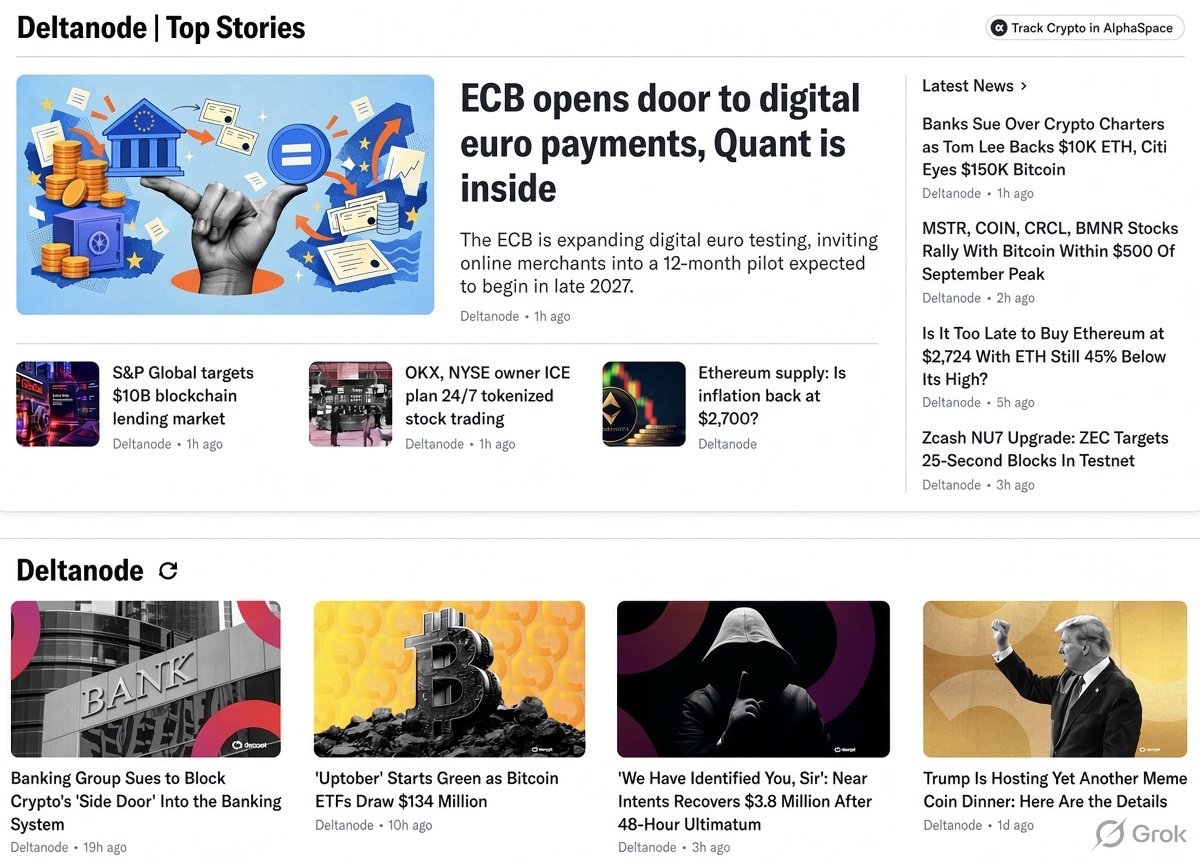
🔐 NEAR INTENTS HACK FULLY RECOVERED
The $3.8M stolen in the NEAR Intents exploit has reportedly been recovered in full.
The attacker moved funds through KuCoin and into Bitcoin before approximately 34.59 BTC was ultimately returned to the recovery wallet.
This is an important reminder that public blockchain transactions can make stolen funds difficult to hide once addresses are identified and exchanges cooperate.
🇺🇸 US MACRO: THE JOBS MARKET IS WEAKER THAN IT LOOKED
September payrolls came in at just 29,000, versus expectations around 84K–90K.
The revisions were even more significant:
• July revised from +21K → -10K • August revised from +162K → +133K • September: +29K • Unemployment: 4.1% → 4.2% • Average hourly earnings: +0.1% MoM / +3.0% YoY
Across the last three months, the US economy created roughly 152K jobs, or only around 51K per month.
The market immediately repriced Fed expectations.
October rate-hike odds fell from roughly 70% at the start of last week to ~18% after the payroll report.
The 2Y Treasury yield dropped around 10 bps, reflecting lower expectations for near-term Fed tightening.
But the long end is telling a different story.
The 10Y yield briefly fell toward 5.16% after payrolls before reversing toward 5.28%-5.29%, close to its highest level since 2002.
So we have an unusual setup:
Weak labor market → less Fed tightening
but
High inflation / government borrowing → 10Y remains elevated
The next major macro checkpoints:
📌 Today: ISM Services 📌 Wednesday: September Fed meeting minutes 📌 October 14: September inflation data
The services employment index was already weak at 47.8 in August, below the 50 level that separates expansion from contraction.
🛢️ OIL + HORMUZ
Brent: ~$101.59 WTI: ~$90.05
The G7 agreed to release around 100M barrels of crude and diesel from emergency reserves over four months.
That works out to roughly 830K barrels/day.
OPEC+ meanwhile left November production targets unchanged.
Yet Brent remains above $100.
That tells us the physical supply situation is still extremely tight.
The Strait of Hormuz normally carries around one-fifth of global crude and LNG flows, and the conflict has severely disrupted those routes.
Iran continues to maintain that the Strait will remain closed until Washington meets its stated conditions.
This remains one of the biggest macro variables for:
Oil → Inflation → Treasury yields → Fed expectations → Risk assets
The key thing to watch is whether the G7's emergency diesel release actually brings fuel prices down faster than crude prices.
🤖 TRUMP CREATES AI SUPER-INTELLIGENCE FORCE
President Trump announced a “Super Intelligence Force” on October 4 to coordinate US AI policy.
The group will be led by Director of National Intelligence Jay Clayton and report directly to Trump and his chief of staff.
The announcement follows a White House meeting involving major AI/technology companies including:
OpenAI, Anthropic, Google, Meta, Nvidia and SpaceXAI.
The companies agreed to voluntary AI safety standards described by Trump as “morally binding.”
The government's 120-day review could influence:
• Federal AI standards • Government procurement • Export controls • Data-center policy • GPU infrastructure • Cloud infrastructure • Decentralized computing
For crypto-AI infrastructure, this is potentially more opportunity than immediate restriction.
Companies with transparent, auditable infrastructure could benefit if regulation becomes stricter.
🇷🇺 RUSSIA MOVES DIGITAL RUBLES INTO GOVERNMENT PAYROLL
Russian Ministry of Finance employees received their salaries in digital rubles for the first time on October 1.
Russia's national digital-ruble rollout began September 1.
The system remains voluntary, meaning employees can request payment through the digital currency.
Federal budget spending using digital rubles has been unrestricted since January 2026.
This is another real-world example of governments moving from CBDC experimentation toward actual payment infrastructure.
🏦 US BANKS SUE OVER CRYPTO CHARTERS
The Independent Community Bankers of America sued the OCC on October 2.
The group argues that the OCC exceeded its authority by granting national trust bank charters to crypto companies.
The dispute specifically targets Protego's conditionally approved charter.
The banking industry argues crypto firms are receiving federal credibility without facing the same:
• Capital requirements • Liquidity requirements • Deposit insurance requirements
as traditional banks.
This is an important regulatory fight because it could determine how crypto companies interact with the US banking system.
🏭 SCHNEIDER ELECTRIC → $22.6B PTC DEAL
Schneider Electric agreed to acquire PTC for $205/share in cash.
That's a 42.3% premium to PTC's previous close and values the deal around $22.6B, or about $23.7B including debt.
PTC shares jumped more than 34% pre-market.
Schneider shares dropped more than 7%.
Why?
Schneider plans to fund the transaction with approximately:
• €6B in new shares • €17B in new debt
The company expects approximately €250M/year in cost savings and around €800M additional revenue by year three.
The deal is expected to close by Q3 2027, subject to regulatory approval.
The interesting trade here is the gap between PTC's market price and the $205 offer.
That spread represents the market's estimate of deal-closing risk.
💾 TOSHIBA SHOCKS SEAGATE + WESTERN DIGITAL
Toshiba announced plans to spend roughly ¥60B / $400M to double hard-drive production by its 2027 financial year.
The market immediately punished the existing shortage winners.
Seagate: -9.96% Western Digital: -10.07%
Both stocks had massively rallied because investors were betting that limited hard-drive supply would continue supporting pricing.
Toshiba currently has just over 10% of storage capacity market share and wants to reach roughly 30%.
But there is a catch.
Citi believes the market may be overstating Toshiba's impact because it still depends on outside suppliers for critical components such as disks and recording heads.
Seagate also reportedly has much of its data-center drive capacity allocated through 2027 under long-term contracts.
The bigger lesson:
When a stock's valuation depends heavily on scarcity, even the announcement of future supply can destroy billions in market value.
🇧🇷 BRAZIL ELECTION
Brazil's first-round election produced a major polling surprise.
Flávio Bolsonaro: 47.04% Lula: 45.15%
Neither crossed 50%, so the election goes to a 25 October runoff.
Flávio won major population centers including São Paulo and Rio de Janeiro, while Lula dominated the northeast.
Abstention reached 21.08%, the highest first-round level since 1998.
Markets are already positioning for a potentially more business-friendly government.
Analysts are looking for:
🇧🇷 Brazilian stocks higher 💵 Brazilian real stronger 📉 Dollar/real lower
Historical precedent matters too.
After Bolsonaro outperformed polls against Lula in 2022, the Brazilian real strengthened more than 4% and the Bovespa gained roughly 5.5%.
Lula eventually won that runoff.
🇯🇵 JAPAN
The Nikkei crossed 70,000, rising 2.53% to its highest close since early July.
Chip stocks followed Nvidia's strength.
This continues to reinforce the global AI/chip investment theme, although elevated valuations remain something to watch.
🇬🇧 UK
UK services companies raised prices at the fastest pace since May, partly because of higher fuel costs.
Services PMI: 52.1
The combination of higher energy prices and services inflation remains another potential problem for central banks.
📡 BT → TALKTALK
BT agreed to acquire TalkTalk for around £400M, bringing approximately 2.5 million customers.
The UK competition watchdog is expected to report on the transaction by 19 October.
🚗 MUSK + TSMC
Elon Musk confirmed discussions with TSMC over the proposed Texas Terafab chip project.
Musk said that “something may come of it.”
If the project progresses, it could become another major piece of the US semiconductor and AI-infrastructure buildout.
📈 MARKET SNAPSHOT
Crypto
BTC: $86.1K ETH: $2.72K XRP: $1.52
US Futures
S&P 500: 7,763 ▼0.18% Nasdaq 100: 30,983 ▼0.25%
Rates
10Y Treasury: 5.29% ▲0.25%
Commodities
WTI: $91 Gold: $4,159 Silver: $61.68
🧠 DELTANODE MACRO READ
The interesting part of today's market isn't simply that BTC is at $86K.
It's the conflict between several forces:
Weak US jobs → reduces near-term Fed hike expectations
10Y at ~5.3% → financial conditions remain tight
Oil above $100 → inflation risk remains elevated
Hormuz disruption → adds another inflation/supply shock
BTC holding $86K → crypto is showing relative resilience despite restrictive long-end rates
Fear & Greed 68 → sentiment is already leaning toward greed
So I wouldn't treat $86K by itself as a bullish confirmation.
The bigger question is whether BTC can hold the level once US liquidity and full CME participation return, while yields and oil remain elevated.
For the week, the key cross-asset variables are:
BTC + DXY + 10Y + Oil + US equities + Fed expectations
That's where the real signal should come from.
⚠️ NFA. This is market analysis, not financial advice.