Market Report ·
🌍 Iran War Escalation, Oil at $106 & the S&P 500’s Hidden Bear Market
Maritime security risks remain elevated as Iran tensions persist, while oil near $106 and restrictive Fed expectations challenge markets. Despite record-high equity levels, 84% of S&P 500 stocks are reportedly 10% below their highs, exposing extreme concentration in AI-led gains.
🌍 DELTANODE | WAR & MACRO UPDATE 📅 18 October 2026
⚠️ MIDDLE EAST ESCALATION: MARITIME SECURITY RISKS REMAIN ELEVATED
🇮🇷 IRAN–US–ISRAEL: LATEST DEVELOPMENTS
• 🇮🇷 Iranian President: Tehran says it does not intend to attack any country but will respond forcefully to any attack and defend its territory.
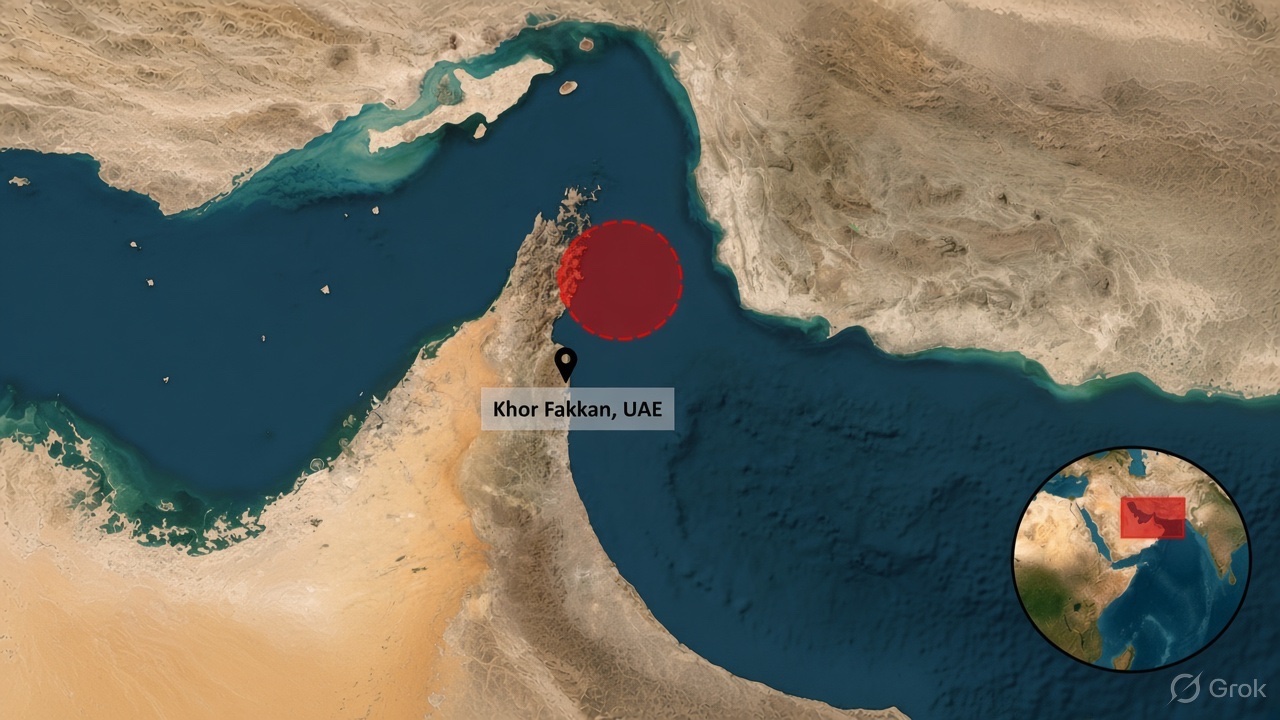
• 🚢 UAE: Reports indicate a vessel was targeted in waters northeast of Khorfakkan, highlighting continued maritime security risks near the Gulf of Oman.
• 🇮🇶 Northern Iraq: Drones reportedly targeted Iranian Kurdish opposition bases in Erbil.
• 🇸🇦 Saudi Arabia–Yemen: Iran's foreign minister says Tehran is ready to assist in efforts to stop the conflict between Saudi Arabia and Yemen. Separately, Saudi Arabia has publicly accused Iran of encouraging renewed Houthi attacks.
• 🚢 Strait of Hormuz: CENTCOM has rejected several Iranian claims concerning control of the strait, a vessel sinking and US casualties. The US command reported that more than 40 vessels had transited the strait in the preceding 24 hours. These are competing claims, not independently verified conclusions.
• 🇺🇸 US military posture: The USS George H.W. Bush reportedly returned to the Arabian Sea following a visit to Thailand. Separately, the USS Theodore Roosevelt carrier strike group departed San Diego with a large uncrewed surface vessel, with deployment towards the Middle East expected.
• 🇮🇷 Military tensions: Earlier reports cited rocket launches from Kermanshah province and possible missile targeting of vessels in the Strait of Hormuz. These reports require independent confirmation.
• 🇺🇸 Washington–Tel Aviv: Secretary of State Marco Rubio reportedly spoke with Benjamin Netanyahu. Previous reports also described Israeli concerns about Iranian military movements and discussions of potential targets, including energy, missile and nuclear infrastructure. No new strike decision is established by the reports provided.
• 🇺🇸 Ground and nuclear options: Trump previously ruled out deploying US ground troops in Iran and said the US would not use nuclear weapons against Iran.
• 🏦 Sanctions: The US Treasury announced sanctions targeting an Iraqi bank over alleged links to Iranian government entities, alongside currency-exchange networks and Iranian banks operating in free-trade zones.
🚢 RED SEA & GULF SHIPPING UNDER PRESSURE
UKMTO previously reported two maritime incidents northeast of Al Jubayl, Saudi Arabia:
• A tanker approximately 78 nautical miles northeast of Al Jubayl reportedly came under an RPG attack from a small boat, damaging its aft port quarter. The crew were reported safe, while the full damage assessment and environmental impact remained unknown.
• A separate report described a tanker being struck by an unidentified projectile approximately 68 nautical miles northeast of Al Jubayl.
The incidents reinforce the importance of monitoring shipping security, insurance costs, vessel routing and potential disruption to regional energy exports. The two reports should not automatically be treated as one incident.
━━━━━━━━━━━━━━
📉 US EQUITIES: THE “BULL-BEAR MARKET” PARADOX
The Kobeissi Letter's latest thesis challenges the assumption that an S&P 500 trading near record highs means the broader equity market is healthy.
The central argument: index strength is concealing widespread weakness beneath the surface.
📊 1. Index performance versus market breadth
• Since the start of the Iran War on 28 February, the S&P 500 has reportedly gained approximately 900 points.
• Since the 30 March 2026 low, the index has reportedly rallied nearly 1,500 points, adding around $14 trillion in market capitalisation.
• Despite this recovery, the analysis claims 84% of S&P 500 constituents are at least 10% below their all-time highs.
• The report estimates that 59% are down at least 20%, 41% more than 30%, and 17% more than 50% from their respective highs.
• Real estate, materials, utilities and consumer discretionary are identified as particularly weak sectors.
The implication: the headline index may be strong while a substantial portion of its constituents remain in individual bear markets.
📊 2. Extreme concentration in a handful of stocks
According to the analysis, just 10 stocks generated approximately 70% of the S&P 500's gains since the March 30 low.
Key contributors reportedly include:
• NVDA: The largest individual contributor, accounting for approximately 3 percentage points of the index's reported 23% advance.
• MU, AAPL and MSFT: Each reportedly contributed around 2 percentage points.
• AMD and GOOGL: Also made substantial contributions.
The remaining 490 stocks collectively contributed only around 7 percentage points.
DeltaNode takeaway: Index-level strength should not be confused with broad market participation. If leadership weakens, concentration becomes a vulnerability. If participation broadens, it could provide another leg higher.
📈 3. The macroeconomic backdrop has changed dramatically
At the beginning of 2026, markets reportedly expected three Federal Reserve rate cuts, totalling 75 basis points.
The current picture described in the report is substantially different:
• The Fed has already hiked rates once this year.
• Markets reportedly price in another three hikes by June 2027.
• The cumulative shift in rate expectations is approximately 175 basis points relative to the original easing outlook.
• Brent crude is cited at approximately $106 per barrel.
• Diesel prices are reportedly more than 80% above their January lows.
• Inflation remains well above the Fed's 2% target, while borrowing costs and fiscal pressures remain elevated.
These conditions normally create headwinds for equity valuations. Yet the S&P 500 remains close to record territory, partly reflecting the strength of its largest technology constituents.
📊 4. Earnings and AI remain the bullish counterargument
The Kobeissi Letter cites approximately 52% blended S&P 500 earnings growth for Q2 2026, arguing that underlying corporate profitability has been unusually strong despite the energy shock and restrictive monetary policy.
The report also highlights Nvidia's valuation:
• NVDA's share price reportedly rose around 21% over the preceding 12 months.
• Its price-to-earnings ratio reportedly declined around 46%.
• Its forward P/E is cited at approximately 24x, compared with roughly 22x for the S&P 500.
The broader argument is that earnings growth has helped absorb rising macroeconomic risks, while some major technology stocks appear less expensive relative to earnings than their price appreciation alone suggests.
These figures are claims from the cited analysis and should be checked against current market data and earnings revisions before being used as trading inputs.
📈 5. Why the report sees further upside
The bullish scenario rests on several potential catalysts:
• A reduction in geopolitical tensions and the eventual end of the Iran War.
• Lower oil and diesel prices, easing inflation expectations.
• A shift towards a less restrictive Federal Reserve policy.
• A recovery in market breadth, with more stocks participating in the rally.
• Continued AI-driven earnings growth and investment.
The report argues that if these conditions materialise, the S&P 500 could experience another substantial rally. It suggests the index might have been above 9,000 without the war, while the headline framing also references 8,000 as a potential future level.
Important: These are bullish scenarios, not confirmed price targets. Their realisation depends on earnings, valuations, interest rates, energy prices and geopolitical developments.
📉 6. The bear case has not disappeared
The same evidence supports several risks:
• Higher-for-longer rates could pressure equity multiples.
• Persistently expensive energy could keep inflation elevated.
• Narrow market leadership could amplify losses if the largest technology stocks reverse.
• Weak breadth could signal that the index is less resilient than its headline performance suggests.
• Any further escalation around the Strait of Hormuz could intensify energy and inflation shocks.
The concentration thesis is therefore conditional. Narrow leadership can sustain an index rally, but it also increases dependence on a small group of stocks.
━━━━━━━━━━━━━━
🎯 DELTANODE | WHAT TO WATCH NEXT
For equities: • S&P 500 breadth and equal-weight performance versus the cap-weighted index. • NVDA, MU, AAPL, MSFT, AMD and GOOGL leadership. • Treasury yields, Fed expectations and inflation data. • Corporate earnings revisions and forward valuations.
For oil and global macro: • Brent crude and diesel prices. • Verified maritime incidents near Khorfakkan, Al Jubayl and the Strait of Hormuz. • Tanker traffic, shipping insurance and any confirmed disruption to energy exports. • Official statements and independently corroborated military developments.
For Bitcoin and crypto: • DXY and US Treasury yields. • Oil-driven inflation expectations and Fed repricing. • BTC spot demand, ETF flows, open interest, CVD and funding. • Whether risk assets confirm a move or diverge from the broader macro backdrop.
━━━━━━━━━━━━━━
🧠 FINAL VIEW
We are dealing with two overlapping market stories: rising geopolitical and inflation risks, alongside unusually strong earnings and concentrated equity-market leadership.
The bullish case is that easing geopolitical pressure could bring oil lower, reduce inflation risks and allow market breadth to recover.
The bearish case is that higher energy costs and restrictive monetary policy eventually overwhelm earnings resilience, exposing the weakness hidden beneath the index.
For DeltaNode, the key is not to blindly follow calls for a “Black Monday” or assume that new record highs are inevitable. Track confirmation, measure market breadth, monitor liquidity and remain flexible when the evidence changes.
⚠️ Maritime and military reports above are based on the supplied news feed and cited analysis. Several claims remain unverified. The equity statistics and projections are attributed to The Kobeissi Letter and are not independently audited here.
ΔΣΦ | Observe. Verify. Adapt.