Market Report ·
🇺🇸 US STOCKS & CRYPTO MARKET REPORT Monday 19th October , 2026
Bitcoin holds above $82K as ETF outflows, Fed rate expectations, oil volatility, China's property slump and crypto infrastructure risks shape global markets ahead.
📊 DELTANODE | WEEKLY MARKET INTELLIGENCE 📅 Monday, 19 October 2026
🌍 GLOBAL MARKETS, MACRO & CRYPTO INFRASTRUCTURE
━━━━━━━━━━━━━━━━━━
👀 1. MARKET OVERVIEW
₿ Bitcoin consolidates above $82K
Bitcoin held its weekend range and traded around $82,148 to $82,769 on Monday, with no meaningful directional breakout. Weekend trading volume was approximately one-third of normal levels, leaving the recovery without strong confirmation.
• BTC: $82,148 | +0.19% • ETH: $2,415 | −0.06% • Total crypto market cap: $2.74T | +0.09% • 24-hour market volume: $66.28B | +49.82% • Bitcoin dominance: 60.23% | +0.06% • Fear & Greed Index: 49 | Neutral • Altcoin Season Index: 56/100
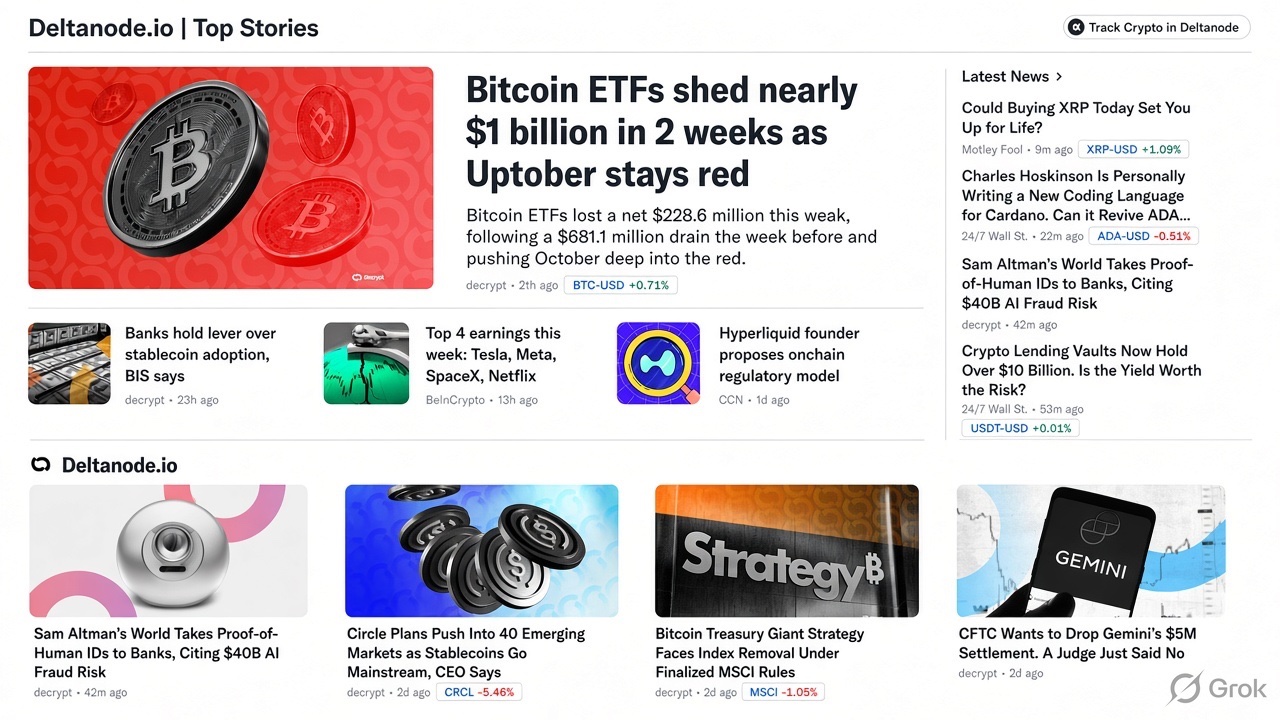
📉 ETF flows remain a concern US spot Bitcoin ETFs recorded $82.4M in net outflows on Friday, October 16, including $71.8M from BlackRock's IBIT. Weekly Bitcoin ETF outflows reached approximately $228.4M, while Ethereum funds lost around $320.1M over the week.
Bitcoin remains near the $82K level, but weak institutional flows and subdued weekend participation leave the next directional move unconfirmed. The $64K–$67K region remains a downside reference if the broader market structure deteriorates.
📅 Macro calendar: The next major Federal Reserve decision is scheduled for October 27–28, with the decision expected on October 28. Attention also shifts to corporate earnings and developments in energy, AI infrastructure and geopolitics.
━━━━━━━━━━━━━━━━━━
🛢️ 2. OIL FALLS AS WASHINGTON WAIVES RUSSIA SANCTIONS
Brent crude fell approximately 2.1% to $107.55 per barrel on Monday after briefly touching $110 last week, its highest level since May 19.
The decline followed President Donald Trump's October 16 order waiving sanctions and tariffs under the Graham Act, just two days before they were due to take effect on October 18.
The proposed penalties included: • Tariffs of up to 500% on Russian goods. • Tariffs of up to 100% on major buyers of Russian oil and gas. • Sanctions targeting foreign banks dealing with Russian state banks.
Secretary of State Marco Rubio said the administration would take up to 60 days to assess the economic impact. A Russian diesel arrangement reportedly starts at approximately 2.3 million barrels this month, rising to around 7.6 million barrels monthly.
⚠️ Geopolitical risk remains elevated. Iran's Revolutionary Guards claimed that two additional tankers caught fire after hitting mines in the Strait of Hormuz over the weekend. The claim has not been independently confirmed.
DeltaNode takeaway: The sanctions waiver reduces the potential penalty on Russian energy flows, easing immediate supply concerns. However, the Hormuz situation remains a major upside risk to oil prices. Watch the 60-day review, possible congressional resistance and tanker traffic before treating the decline as a sustained reversal.
━━━━━━━━━━━━━━━━━━
🇨🇳 3. CHINA GROWTH BEATS EXPECTATIONS, BUT PROPERTY REMAINS WEAK
China's economy grew 4.5% year over year in Q3 2026, beating forecasts of 4.4% and improving from 4.3% in Q2.
📊 Key economic data • Q3 GDP growth: 4.5%, versus 4.4% expected. • Growth during the first nine months: 4.6%. • September retail sales: +1.1%, versus 0.5% expected. • Industrial production: +5.5%, the strongest growth in six months. • Property investment, first nine months: −20.6%. • Fixed-asset investment: −7.2%.
Retail sales recorded their strongest growth since March. However, exports and industrial production continue to carry much of the economic expansion while property investment contracts sharply.
The Australian dollar, often used as a liquid proxy for China-related sentiment, rose 0.36% to approximately $0.6971.
DeltaNode takeaway: China's headline growth is stronger than expected, but domestic demand remains fragile. The 20.6% property investment contraction highlights the structural weakness beneath the headline. Watch whether retail sales remain above 1% in October and whether domestic consumption can reduce reliance on exports.
━━━━━━━━━━━━━━━━━━
🔌 4. MICROSOFT WITHDRAWS FROM A £2 BILLION UK AI DATA-CENTRE PROJECT
Microsoft has reportedly withdrawn from Nscale's planned data centre in Loughton, Essex, which had been positioned as one of the UK's largest AI infrastructure developments.
The project carried a planned investment of approximately £2 billion. Authorities reportedly indicated that the site might not receive a grid connection until the 2030s.
Nscale said its relationship with Microsoft remained strong and that the grid issue would not affect its other contracts. Microsoft did not comment.
📉 Why investors should care • Nscale is preparing for a potential New York listing that could raise up to $3 billion. • Microsoft and Anthropic reportedly account for around 85% of its contracts. • The company recorded a $1 billion loss on $141 million in first-half revenue, largely attributed to non-cash charges. • Nasdaq 100 futures were up approximately 1.3% early Monday following a difficult week for US technology stocks.
DeltaNode takeaway: AI infrastructure is facing constraints beyond financing and chip supply. Electricity availability, grid connections, construction timelines and customer concentration are becoming critical investment risks. Watch whether Nscale proceeds with its listing and how investors price its contracted revenue against its infrastructure and financing requirements.
━━━━━━━━━━━━━━━━━━
🚀 5. SPACEX FACES A MAJOR EARNINGS AND CASH-FLOW TEST
SpaceX is scheduled to report Q3 results after the US market closes on Tuesday, October 20, according to the supplied report.
📊 Market expectations • Revenue: $12.89 billion. • Adjusted earnings: approximately $0.15 per share. • Capital spending: $19.61 billion. • Free cash flow: approximately −$11.6 billion. • Bridge loan: $20 billion, reportedly due in September 2027.
Shares closed at $146.03 on Friday, down 15.1% from the October 6 close and approximately 28% below the June record. Options pricing implied a potential earnings-related move of around 6.8% in either direction.
Approximately 1.3 billion shares are reportedly becoming eligible for sale around the results, ahead of a larger lock-up expiry on December 8. Netflix is also scheduled to report on Tuesday.
⚠️ The critical issue is cash burn. Revenue growth alone will not settle the debate if capital expenditure continues to outpace cash generation. Investors will be watching spending guidance, liquidity, financing requirements and the ability to convert AI, satellite and launch infrastructure investments into sustainable returns.
DeltaNode takeaway: SpaceX is a key test of investor appetite for capital-intensive technology businesses. Strong revenue may not be enough if cash outflows remain exceptionally large.
━━━━━━━━━━━━━━━━━━
🇫🇷 6. FRANCE FACES SOCIAL UNREST AND A SOVEREIGN-DEBT TEST
France experienced widespread demonstrations against the rising cost of living on Saturday, October 17. Authorities reported approximately 550,000 participants nationwide, while Interior Minister Laurent Nuñez said around 2,400 people were arrested.
Carrefour reported that 50 stores were targeted, and its shares fell more than 2% at Monday's open.
📉 European market reaction • CAC 40: −1.3% to 7,854.31. • FTSE 100: −0.8%. • Germany's DAX: −1%. • French 10-year government bond yield: approximately 4.86%. • French-German 10-year yield spread: 143.5 basis points.
France's borrowing costs have approached their highest levels since 2002, while the yield spread over German debt recently exceeded 150 basis points, its widest level since the euro-debt crisis.
Moody's is scheduled to review France's Aa3 sovereign credit rating after European markets close on Friday, October 23. Political divisions continue to complicate the 2027 budget debate, and unions have called a national strike for November 5.
DeltaNode takeaway: Political instability can make fiscal consolidation more difficult just as borrowing costs are elevated. Moody's decision is the key near-term event. A downgrade or negative reassessment could add pressure to French bonds and the euro-area risk outlook.
━━━━━━━━━━━━━━━━━━
🏦 7. BARCLAYS NOW EXPECTS TWO MORE FED RATE HIKES
Barclays now expects the Federal Reserve to raise rates by 25 basis points in both December and January, revising its earlier forecast of a December increase only.
The change follows stronger inflation readings and resilient industrial activity.
• US industrial production in September: +0.7%, versus 0.4% expected. • Factory capacity utilisation: 76.9%, the highest since December 2023. • Next Fed decision: October 27–28.
The Federal Reserve is in its pre-meeting quiet period, limiting officials' ability to comment publicly on the changing outlook.
DeltaNode takeaway: Persistent inflation and stronger activity could delay monetary easing or shift expectations toward further tightening. Higher-for-longer rates would generally create a more challenging liquidity environment for risk assets, including growth stocks and cryptocurrencies. Barclays' forecast is an analyst view, not a confirmed Fed policy decision.
━━━━━━━━━━━━━━━━━━
♻️ 8. EQT AGREES TO BUY CLEANAWAY FOR A$9.3 BILLION
Swedish investment firm EQT has agreed to acquire Australia's Cleanaway Waste Management in a transaction valued at approximately A$9.3 billion, including debt.
• Offer price: A$3.095 per share in cash. • Premium: 32.1% to the A$2.37 closing price on August 12. • Shares rose approximately 20% to A$2.96 in early Sydney trading. • Shareholder vote: expected before the end of February 2027. • Target completion: end of March 2027.
Cleanaway's board supports the transaction, subject to an independent expert's report and the required approvals.
DeltaNode takeaway: The transaction highlights continued private-equity interest in established infrastructure and essential-service businesses. The remaining gap between the offer price and the market price reflects deal-completion uncertainty and execution risk.
━━━━━━━━━━━━━━━━━━
🇰🇷 9. SOUTH KOREA'S KOSPI REVERSES A 3.17% DROP
South Korea's Kospi opened sharply lower on Monday before staging a strong recovery.
• Opening decline: −3.17%. • Intraday low: 5,488.41. • Closing level: 5,768.01, up 1.76%. • Institutional net purchases: approximately ₩574.66 billion, or $432 million. • Retail net selling: approximately ₩1.09 trillion.
Samsung Electronics rose 1.16%, SK Hynix gained 0.39%, and Hyundai Motor climbed 4.49%.
DeltaNode takeaway: Institutional buying helped reverse the sell-off, demonstrating demand at lower prices. However, one session does not establish a durable trend reversal. Watch foreign flows, semiconductor performance and whether institutional demand persists.
━━━━━━━━━━━━━━━━━━
🪙 10. CRYPTO INFRASTRUCTURE: THREE DEVELOPMENTS TO WATCH
🔐 A. Cysic bridge exploit creates 10 million unauthorised CYS tokens
The Cysic Foundation said an attacker exploited its cross-chain bridge's message-processing logic on October 17, minting 10 million CYS tokens without authorisation on BNB Smart Chain.
• Approximately 7.2 million tokens were routed through decentralised-exchange swaps. • Cysic blacklisted the attacker's address around 76 minutes after the mint. • The bridge remains closed pending a full security review. • The foundation said existing user wallet balances were not affected.
Market implication: Cross-chain bridges remain a critical security vulnerability. Unauthorised minting can create immediate selling pressure, damage confidence and disrupt normal token transfers. The bridge's reopening and the project's accounting for the minted supply are key items to monitor.
🏦 B. ECB advances its digital-euro and tokenised-settlement plans
ECB President Christine Lagarde confirmed that Pontes, the Eurosystem's wholesale settlement system for tokenised assets, went live on September 21.
The ECB plans a 12-month digital-euro pilot beginning in the second half of 2027, conditional on the EU adopting the required enabling regulation by the end of 2026.
A broader initiative, Appia, aims to develop shared infrastructure and standards for European tokenised settlement.
Market implication: Europe is progressing from research toward practical digital-money and tokenised-asset infrastructure. The timeline still depends on legislation, while the wholesale settlement system and the proposed retail digital euro serve different purposes.
₿ C. BIS research links stablecoin growth to US deposit rates
A Bank for International Settlements working paper found that stablecoin market-cap growth slows when US bank deposit rates rise.
The researchers estimated that a one-basis-point increase in deposit rates was associated with roughly a nine-percentage-point reduction in stablecoin growth over a 10-week period, under their model.
The relationship was concentrated in USDC rather than USDT. The authors linked this difference to USDC's closer ties to US institutional users and USDT's heavier offshore usage.
Market implication: Stablecoins compete with bank deposits for capital, but the relationship differs by issuer and user base. Higher deposit yields may make bank accounts more attractive relative to holding stablecoins. The reported result is a research estimate, not a universal rule for every market environment.
━━━━━━━━━━━━━━━━━━
🧠 11. FIDELITY FLAGS SOLANA'S VALIDATOR CONCENTRATION RISK
Fidelity's research arm, FCAT, found that Solana's largest hosting provider accounted for approximately 29% of active stake, exceeding the 25% ceiling used by the Solana Foundation's delegation programme.
A routing failure at one provider reportedly knocked 90 validators offline for 33 minutes in August. The affected stake came within 4.5 percentage points of a finality halt.
Solana's Alpenglow consensus overhaul is scheduled for mainnet on October 21.
🔎 Why concentration matters • A small number of dominant operators can weaken decentralisation and censorship resistance. • Correlated infrastructure failures can take large amounts of stake offline simultaneously. • In many Byzantine fault-tolerant proof-of-stake systems, more than one-third of voting power being unavailable or uncooperative can prevent finality. • Conflicting finality generally requires a more severe threshold, often around two-thirds of voting power acting maliciously, depending on the protocol.
The danger depends on how stake is distributed, whether operators share infrastructure, and the protocol's specific fault assumptions. A hosting provider's share of stake does not necessarily mean it controls all those validators.
DeltaNode takeaway: Solana's concentration risk is not simply about the number of validators. It is about correlated infrastructure, hosting dependencies and how quickly the network can recover from failures. Alpenglow's rollout is an important milestone, but its real-world resilience must be evaluated after deployment.
━━━━━━━━━━━━━━━━━━
📈 12. OTHER IMPORTANT GLOBAL DEVELOPMENTS
🇨🇳 China's property crisis: Property investment fell 20.6% in the first nine months of 2026 despite stronger-than-expected GDP and retail sales. This remains a major weakness in the world's second-largest economy.
🇬🇧 UK AI infrastructure: Microsoft's withdrawal from Nscale's Essex project underscores the importance of power-grid access in the AI infrastructure race.
🇺🇸 Technology earnings: Netflix is scheduled to report on Tuesday, followed by Meta and Tesla on Wednesday. Results and forward guidance could shape sentiment toward growth stocks and AI-related valuations.
🇫🇷 European political risk: France's unrest, budget uncertainty and upcoming Moody's review create a potential catalyst for sovereign-bond volatility.
🇦🇺 Private equity: EQT's proposed Cleanaway acquisition signals continuing interest in essential-service assets.
🇰🇷 Semiconductors: The Kospi reversal and gains in major technology stocks offer a test of institutional appetite following the sharp opening sell-off.
━━━━━━━━━━━━━━━━━━
📌 13. DELTANODE WATCHLIST | THIS WEEK
Macro and liquidity
- Federal Reserve decision, October 27–28.
- Whether inflation expectations reinforce the higher-for-longer rate narrative.
- US Treasury yields, dollar strength and global liquidity conditions.
- Oil prices following the Russian sanctions waiver and developments in the Strait of Hormuz.
Bitcoin and crypto
- BTC's ability to hold the $82K region and establish a meaningful directional move.
- US spot Bitcoin and Ethereum ETF flows after another week of outflows.
- Trading-volume recovery after unusually quiet weekend conditions.
- Bitcoin dominance at 60.23% and the Altcoin Season Index at 56/100.
- Security developments following the Cysic bridge exploit.
- Solana's Alpenglow rollout and validator-infrastructure resilience.
- Stablecoin adoption and the implications of the BIS findings.
Equities and technology
- SpaceX's revenue, spending and free-cash-flow guidance.
- Netflix, Meta and Tesla earnings.
- Nscale's potential listing and the implications of grid-power constraints.
- Semiconductor performance following South Korea's sharp intraday reversal.
Energy and geopolitics
- Brent crude following its pullback from the $110 level.
- Russian energy supply and the administration's 60-day review.
- Independent confirmation and further developments regarding reported tanker incidents in Hormuz.
Europe and China
- Moody's review of France on October 23.
- France's budget negotiations and sovereign-bond spreads.
- Chinese retail sales, industrial activity and continued weakness in property investment.
━━━━━━━━━━━━━━━━━━
🎯 FINAL DELTANODE ASSESSMENT
The market enters the week with Bitcoin consolidating above $82K, weak US crypto ETF flows and no immediate major macro catalyst before the next Fed decision.
Three broader themes stand out:
1️⃣ Liquidity remains decisive. Inflation concerns and expectations of further Fed tightening could limit risk appetite, even when individual assets show short-term resilience.
2️⃣ Infrastructure risk is becoming more visible. Crypto bridges, validator concentration and AI data-centre power constraints show that growth depends on reliable underlying systems, not just adoption narratives.
3️⃣ Headline growth is masking structural weakness. China continues to expand despite a deep property downturn, while France faces rising fiscal and political pressure. Energy markets remain exposed to the interaction between sanctions policy and Middle Eastern supply risk.
⚠️ Trading discipline: BTC holding above $82K is not, by itself, a confirmed bullish signal. Weak ETF flows and thin weekend participation argue for waiting for stronger volume, clearer price structure and confirmation from spot demand before assigning directional conviction.
DeltaNode principle: Track the evidence, separate confirmed data from claims and forecasts, and let validated market conditions determine the signal. No forced trades.
Source basis: the news reports, market snapshots and research summaries supplied in this update. Figures and forecasts are reported as provided and have not been independently verified.